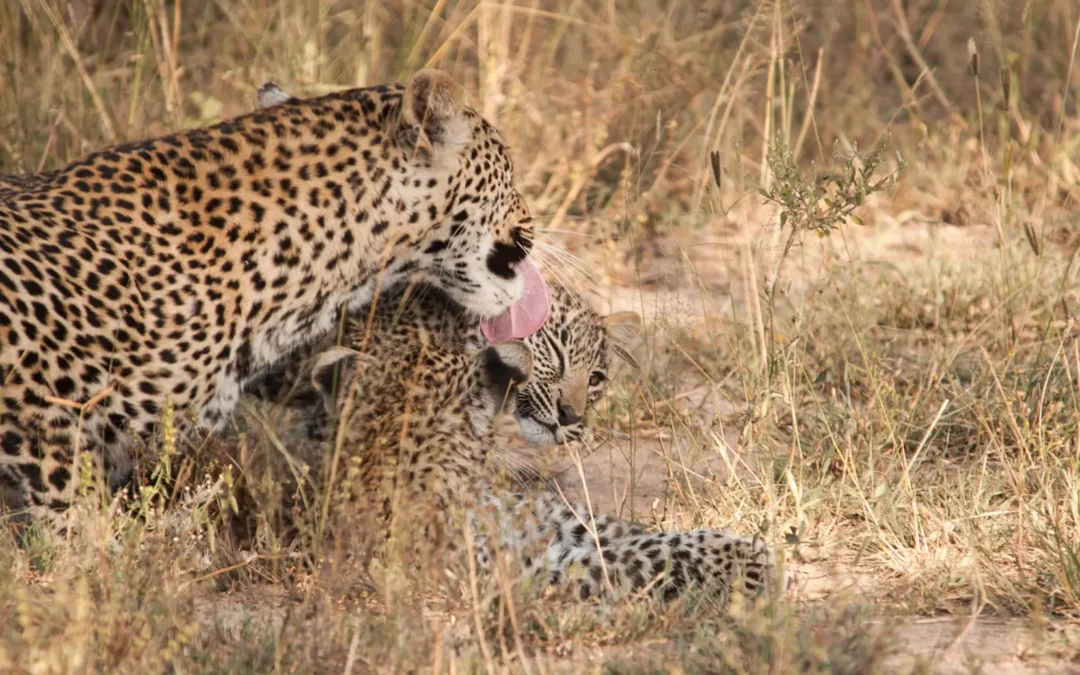
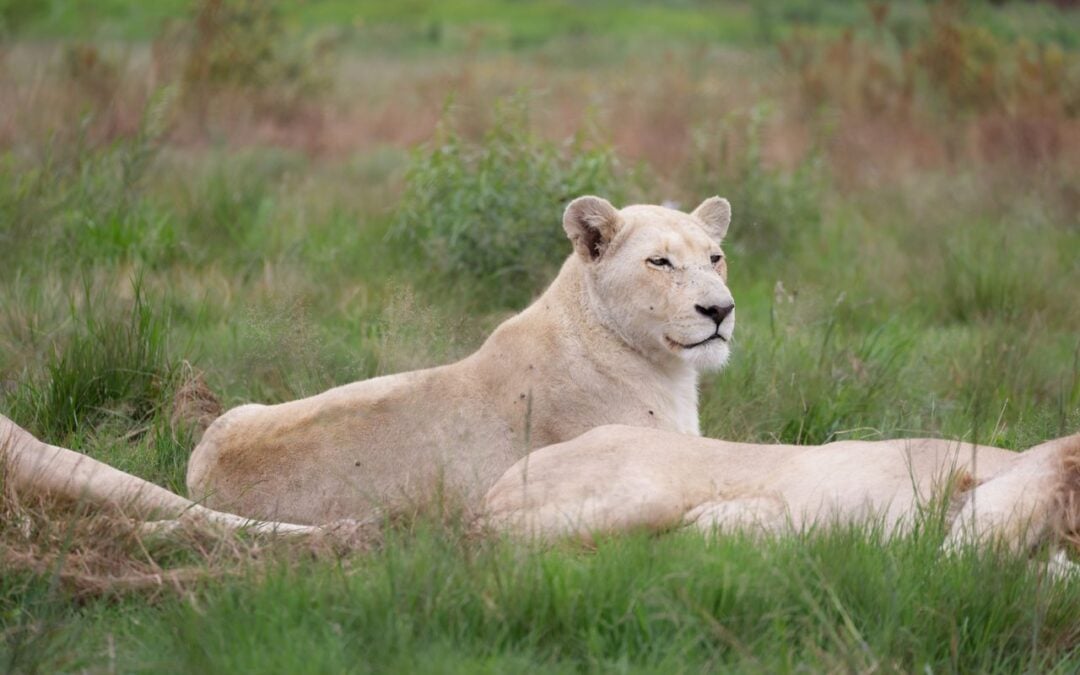
Timbavati Private Nature Reserve is a 53,000-hectare private wilderness in Limpopo, South Africa, sharing an unfenced border with Kruger National Park as part of the Greater Kruger ecosystem. It offers full Big Five safari experiences — including the legendary white lion, whose gene pool originates here — in a setting that is markedly less commercialised than neighbouring Sabi Sands, making it one of southern Africa’s most exclusive and rewarding safari destinations.
Key Takeaways
- Timbavati covers 53,000 ha (530 km²) in Limpopo, South Africa, and is unfenced with Kruger National Park — wildlife moves freely across a combined 400,000+ ha Greater Kruger ecosystem.
- Big Five are resident — elephant, lion, leopard, rhino, and buffalo; wild dog sightings are regular; and cheetah ranges through the reserve.
- The white lion gene pool originates in Timbavati — the first recorded white lion sighting anywhere in the world was made here in 1975.
- Fewer lodges per km² than Sabi Sands — Timbavati is deliberately less developed, which means fewer safari vehicles at game sightings and a more exclusive, uncrowded experience.
- Low malaria risk (prophylaxis recommended); year-round destination with distinct wet and dry season advantages.
- Best reached via Hoedspruit (HDS) or Phalaborwa (PHW) airports, each approximately 45–90 minutes from most lodges.
What Is Timbavati Game Reserve?
Timbavati Private Nature Reserve is a privately owned wilderness area on the western boundary of Kruger National Park in Limpopo Province, South Africa. Established as a collective of private landowners, the reserve operates on a conservation model that prioritises anti-poaching, wildlife management, and responsible, low-density tourism.
The name “Timbavati” is derived from a Shangaan word roughly meaning “the place where something sacred came down from the heavens” — a reference long associated with the mysterious appearance of the white lion, a leucistic colour variation caused by a recessive gene unique to this region. The first verified white lion sighting in the world was recorded inside Timbavati in 1975, and the reserve remains the global heartland of this extraordinary animal.
Critically, Timbavati forms part of the Greater Kruger ecosystem — an unfenced patchwork of private reserves, Kruger National Park, the Klaserie Private Nature Reserve, and the Umbabat Private Nature Reserve covering more than 400,000 hectares. There are no fences between these areas. Lions, leopards, elephants, wild dogs, and the full complement of Africa’s wildlife move continuously across this vast landscape.
Where Is Timbavati Located?
Timbavati sits in Limpopo Province, north-eastern South Africa, at coordinates approximately 24.2°S, 31.1°E. It lies on the western boundary of Kruger National Park, bordered by the Klaserie Private Nature Reserve to the south and the Umbabat Private Nature Reserve to the north.
Nearest airports:
- Hoedspruit (HDS) — Eastgate Airport: ~45–90 minutes from most lodges. Daily flights connect via Johannesburg O.R. Tambo.
- Phalaborwa (PHW): ~60–90 minutes. Alternative gateway for northern Timbavati lodges.
- Johannesburg O.R. Tambo (JNB): ~5–6 hours by road, but most guests fly to Hoedspruit to save time.
Timbavati is positioned at an altitude of approximately 350 m above sea level, in the classic Lowveld biome: mixed bush, mopane woodland, acacia scrub, and dry riverbeds that fill seasonally. Annual rainfall is 400–600 mm, concentrated in the summer months (November–March).
What Wildlife Can You See in Timbavati?
Timbavati offers reliable Big Five game viewing throughout the year. The reserve’s unfenced connection with Kruger means wildlife populations are not artificially contained — animals here are truly wild, following natural movement patterns across the broader landscape.
Resident species include:
| Species | Notes |
| Lion | Resident prides with regular breeding; territorial males often large and well-maned |
| Leopard | Present throughout — particularly sighted in drainage lines and kopje outcrops |
| Elephant | Large breeding herds move through regularly; known for approaching lodge camps at close range |
| Rhino | Both white and black rhino (more secretive); anti-poaching patrols active 24/7 |
| Buffalo | Large herds and solitary dagga boys; year-round |
| Wild dog | Regular sightings — Timbavati has strong pack activity in certain seasons |
| Cheetah | Present in open grassland sections; less frequent than wild dog but sightable |
| White lion | Not guaranteed; white individuals move through the broader Greater Kruger — an extraordinary encounter if witnessed |
| Spotted hyena | Common; night drives frequently reward excellent hyena sightings |
| Hippo / Crocodile | River crossings and permanent water sources |
Birding is excellent, with 350+ species recorded including the Pel’s fishing owl, martial eagle, lilac-breasted roller, saddle-billed stork, and multiple kingfisher species.
How Does Timbavati Compare to Sabi Sands?
Both Timbavati and Sabi Sands Game Reserve (65,000 ha, Mpumalanga) are unfenced Greater Kruger private reserves offering Big Five safaris. The differences are meaningful for certain travellers.
| Factor | Timbavati | Sabi Sands |
| Area | 53,000 ha | 65,000 ha |
| Province | Limpopo | Mpumalanga |
| Lodge density | Lower — fewer lodges per km² | Higher — more lodges, more vehicles |
| Leopard sightings | Excellent | World-famous — among highest density globally |
| White lion | Birthplace — white lion gene pool originates here | Not present |
| Wild dog | Regular | Present |
| Elephant in camp | Very common — herds regularly walk through | Less frequent |
| Feel | Raw, wild, uncrowded | Polished, high-service, more competitive at sightings |
| Typical price | Slightly lower average, with ultra-luxury options | Higher average across the board |
Bottom line: Sabi Sands is the benchmark for leopard sightings and ultra-polished safari hospitality. Timbavati delivers an arguably more authentic, wild, and exclusive experience — particularly for travellers who value space, solitude, and the deeper story of the white lion.
What Are the Best Lodges in Timbavati?
Timbavati deliberately limits lodge development. This means the reserve has fewer properties than comparable reserves of its size — a deliberate conservation choice that directly enhances the quality of game viewing.
Leading lodges include:
- Kings Camp — one of Timbavati’s signature properties; nine suites, known for high-quality guiding, open vehicles on traversing across the reserve’s northern sections, and a strong wildlife photography culture.
- Tanda Tula Safari Camp — a classic tented camp with a loyal repeat-guest following; tents are spacious and the camp leans into an “old Africa” aesthetic that feels genuinely immersive. Offers family safaris with a children’s programme.
- Tanda Tula Field Camp — a smaller, more intimate walking-safari camp operated in conjunction with Tanda Tula Safari Camp; for travellers who want guided walking at the heart of their safari.
- Simbambili Game Lodge — positioned further south in the reserve; well-regarded guiding and a more private layout; access to different traversing zones.
Every lodge operates open 4×4 game drive vehicles with qualified field guides and trackers. Vehicles go off-road; no time limits on sightings; no queuing behind public vehicles. This is the defining advantage of a private reserve over a national park experience.
What Is Included in a Timbavati Safari?
A standard all-inclusive Timbavati safari package typically covers:
- Twice-daily game drives — morning and afternoon/evening, each 3–4 hours with sundowner drinks and bush stops
- Night drives — after-dark viewing of nocturnal species; leopard, hyena, civets, genets, and bush babies commonly seen
- Walking safaris — led by an armed ranger; available at most lodges (confirm at booking)
- All meals — breakfast, lunch, afternoon tea/snacks, and dinner
- Drinks — standard house alcohol included; premium spirits and wine at most lodges on request
- Conservation levies — typically embedded in lodge rates; supports anti-poaching and reserve management
- Laundry — most lodges include laundry service
Excluded at most properties: park fees (if applicable), transfers to/from the lodge, travel insurance, gratuities for guides and trackers, and premium curated experiences (specialist photography guiding, boma dinners booked separately).
Rates are quoted per person sharing per night and include full board. A typical mid-range Timbavati lodge runs from approximately US$600–1,200 per person per night; premium lodges operate at higher price points. Request a personalised quote for current rates and seasonal specials.
When Is the Best Time to Visit Timbavati?
Timbavati is a year-round destination, with each season offering distinct advantages.
| Season | Months | Conditions | Best For |
| Dry season (winter) | May–September | Cool days (15–25°C), cold nights; vegetation thins; animals concentrate at water sources | Best Big Five sightings; easiest tracking; comfortable temperatures |
| Shoulder | April, October | Warming; some green; quieter lodges | Value rates; good sightings; comfortable weather |
| Green season (summer) | November–March | Hot (25–35°C+); afternoon rain; lush green; baby animals | Birding peak; newborns; dramatic landscapes; lower rates |
The dry season (June–August) is the most popular and most expensive period. The grass is short, water scarce — animals concentrate at waterholes and riverbeds. Lion kills and predator sightings are more frequent because prey has fewer hiding places.
The green season (December–February) rewards patient, experienced safari-goers. Timbavati becomes startlingly beautiful. Migratory birds arrive. Impala lambs, zebra foals, and elephant calves are everywhere. Sightings are harder-won but uniquely rewarding. Rates are typically 20–35% lower than peak season.
What Is the White Lion Story in Timbavati?
The white lion is Timbavati’s most singular claim to global distinction. The first white lion ever documented was sighted here in 1975 — an event that sent ripples through the international conservation community and deeply into local Shangaan culture, where white lions carry profound spiritual significance as sacred messengers.
White lions are not albino. They carry a recessive gene — a colour mutation called leucism — that produces a pale, cream-to-white coat while retaining normal eye pigmentation (typically gold or blue). The gene appears nowhere else in Africa with the same frequency as in the Timbavati–Greater Kruger region.
Conservation of the white lion gene is a delicate issue. White individuals in the wild are visible to prey at long range, which affects hunting success; they require genuinely wild conditions to survive. The Global White Lion Protection Trust, founded by Linda Tucker, has worked to protect wild white lions in the Greater Timbavati area for decades.
Sighting a white lion in Timbavati is never guaranteed — these animals are wild and roam across a vast territory. But the knowledge that this is the only place on Earth where such an encounter is possible concentrates the possibility into something profound.
Is Timbavati Safe? What Are the Malaria Risks?
Timbavati is safe to visit for well-prepared travellers. The standard travel precautions for any South African wilderness destination apply: travel with a reputable operator, ensure comprehensive travel insurance, and follow lodge safety protocols (most critically — never walk outside lodge boundaries unaccompanied).
Malaria: Timbavati falls in a low-to-moderate malaria risk zone. Malaria is present in Limpopo; prophylaxis is strongly recommended. The risk is highest during and immediately after the rainy season (November–April) and drops considerably in the dry winter months. Consult a travel health clinic or GP at least four to six weeks before departure to obtain the appropriate prophylaxis.
Lodges provide mosquito nets, plug-in repellents, and room spraying as standard. Repellent, long sleeves at dusk and dawn, and common-sense precautions significantly reduce exposure.
Crime: Timbavati lodges operate in a managed, private environment. Standard vigilance with personal valuables applies. The greatest physical risk in any African wilderness is wildlife-related — which is why walks and night activities are always guided by armed, qualified field guides.
FAQ: Timbavati Game Reserve
How big is Timbavati Game Reserve?
Timbavati Private Nature Reserve covers 53,000 hectares (530 km²), forming part of the Greater Kruger ecosystem. When combined with Kruger National Park, Klaserie, and Umbabat, the total unfenced ecosystem exceeds 400,000 hectares — making it one of the largest contiguous wildlife areas in Africa.
Does Timbavati have the Big Five?
Yes. Timbavati has resident populations of all Big Five species — lion, leopard, elephant, rhino, and buffalo. Wild dog and cheetah are also present, making multi-species sightings achievable across a typical three- to four-night stay. Elephant sightings are a particular highlight, with breeding herds regularly walking through lodge camps.
What makes Timbavati different from Sabi Sands?
Timbavati is less commercially developed than Sabi Sands, with fewer lodges per km² and therefore fewer vehicles at game sightings — giving a more exclusive, uncrowded experience. Timbavati is also the only place on Earth where the white lion gene pool originates, with the first recorded white lion sighting made here in 1975. Sabi Sands, by contrast, is globally renowned for its extraordinary leopard density and is typically the benchmark for ultra-polished, high-service safari luxury.
When should I visit Timbavati for the best game viewing?
May to September (dry season) offers the best conditions for concentrated game viewing: shorter grass, animals at waterholes, cooler temperatures. This is peak season and commands peak rates. November to March (green season) delivers exceptional birding, newborn animals, dramatic skies, and substantially lower lodge rates — ideal for experienced safari travellers willing to work a little harder for sightings.
How do I get to Timbavati Game Reserve?
Fly to Hoedspruit (HDS) — Eastgate Airport on a scheduled service connecting through Johannesburg (O.R. Tambo). Most Timbavati lodges are within 45–90 minutes by road transfer. Some lodges offer light aircraft access to private airstrips inside the reserve. Driving from Johannesburg takes approximately five to six hours — feasible but tiring; a fly-in is strongly recommended.
Is Timbavati suitable for families with children?
Yes, with age caveats. Several Timbavati lodges welcome children above specific minimum ages (typically 6 or 12, depending on the property). Tanda Tula Safari Camp is particularly noted for its family-friendly approach and dedicated children’s activities. Night drives and walking safaris typically carry an age minimum of 12. Always confirm family policies with your operator before booking.
How many nights should I spend in Timbavati?
Three to four nights is the recommended minimum for a satisfying Timbavati safari experience. This allows at least six game drives — enough to meaningfully encounter the Big Five and develop a relationship with the landscape and your guiding team. Longer stays (five to seven nights) are ideal for wildlife photography, specialist walking safaris, or simply immersing deeply. Many travellers pair Timbavati with a second reserve or a Cape Town extension.
Are white lions guaranteed to be seen in Timbavati?
No — white lion sightings cannot be guaranteed. White lions are wild animals ranging across a vast territory; they are not kept in any enclosure within the reserve. The white lions that carry the Timbavati gene move freely through the Greater Kruger ecosystem. Sightings occur and are deeply memorable when they do — but the honest advice is: visit Timbavati for the extraordinary wildlife and reserve experience, and if the white lion appears, it will be one of those unrepeatable moments that define a safari.
Plan Your Timbavati Safari
Timbavati is a destination that rewards travellers who choose it deliberately. Its unfenced 53,000 hectares, legendary wildlife encounters, and the singular story of the white lion make it one of southern Africa’s most compelling safari territories — less famous than Sabi Sands, and all the better for it.
For a personalised itinerary, lodge recommendations, current rate quotes, and all logistics from Johannesburg to your Timbavati camp, enquire now with the specialist team at African Safari Group — ASG’s safari specialists have arranged Timbavati safaris across all seasons and lodge categories, and can match you to the right property, the right time, and the right experience.